
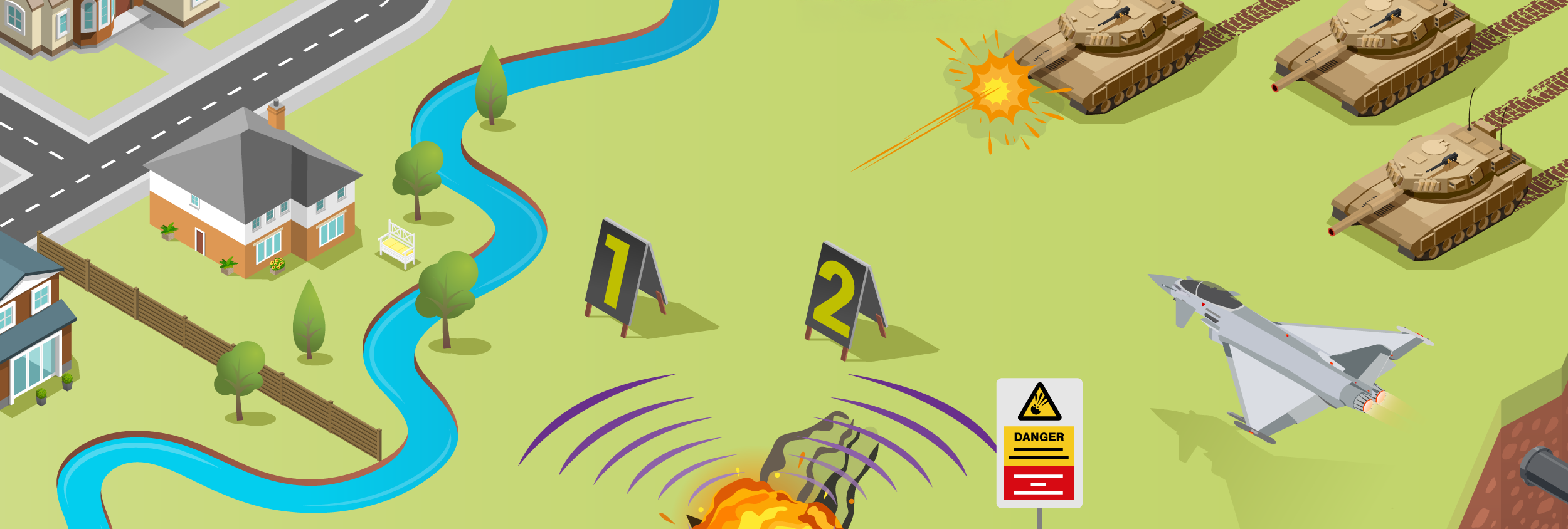
Contamination Challenge Game
Applying the Source–Pathway–Receptor model through time-pressured scenario decision-making.
Designed an interactive learning activity for the Centre for Defence Chemistry to introduce the Source–Pathway–Receptor model through scenario-based gameplay rather than passive instruction.
The activity evolved from a practical sampling exercise into a timed, touchscreen experience presenting contamination scenarios that require rapid, informed decision-making. Learning is reinforced through action, consequences, and immediate feedback rather than explanation alone.
I produced six isometric scenario environments, each built around a floating island representing a distinct contamination context, including farmland, housing, countryside, and a military firing range. Each scenario visualises the relationship between the hazard source, the environmental pathway, and the affected receptor through a clear spatial composition.
Gameplay mechanics are intentionally simple to support participants with varying levels of prior knowledge. Short, repeatable scenarios encourage experimentation while the timer maintains pace and focus, making the activity suitable for teaching, demonstrations, and independent exploration.
Visually, the interface uses bold colour, clear iconography, and strong hierarchy to support rapid comprehension. A complementary user interface, designed by another team member, applies the same visual language. The activity was demonstrated on a large touchscreen at the Defence and Security Doctoral Symposium, and its modular structure supports long-term reuse and future expansion.
Environmental Contamination: Source, Pathway, and Receptor
An interactive environmental simulation is presented through a video walkthrough. Learners are tasked with identifying contamination sources, transport pathways, and affected receptors in a groundwater pollution scenario involving explosive residues and livestock exposure.
Environmental Contamination: Source, Pathway, and Receptor
An interactive environmental simulation is presented through a video walkthrough. Participants are tasked with identifying the contamination source, transport pathways, and affected receptors in a scenario-based activity that incorporates timed decision-making, feedback, and outcome reinforcement.
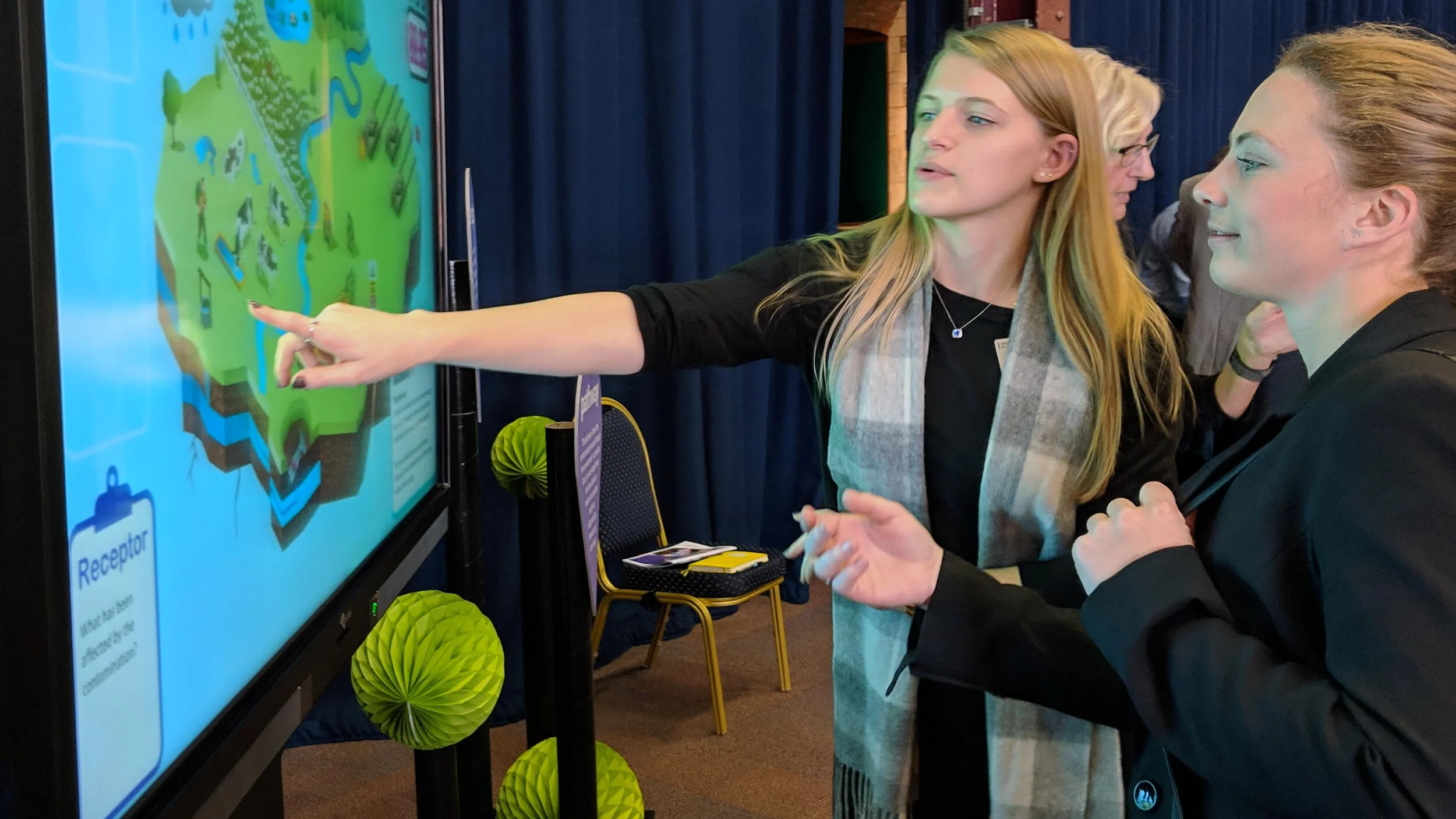
Students interact with the Contamination Challenge Game on a CTOUCH interactive touchscreen at the Defence and Security Doctoral Symposium (DSDS).
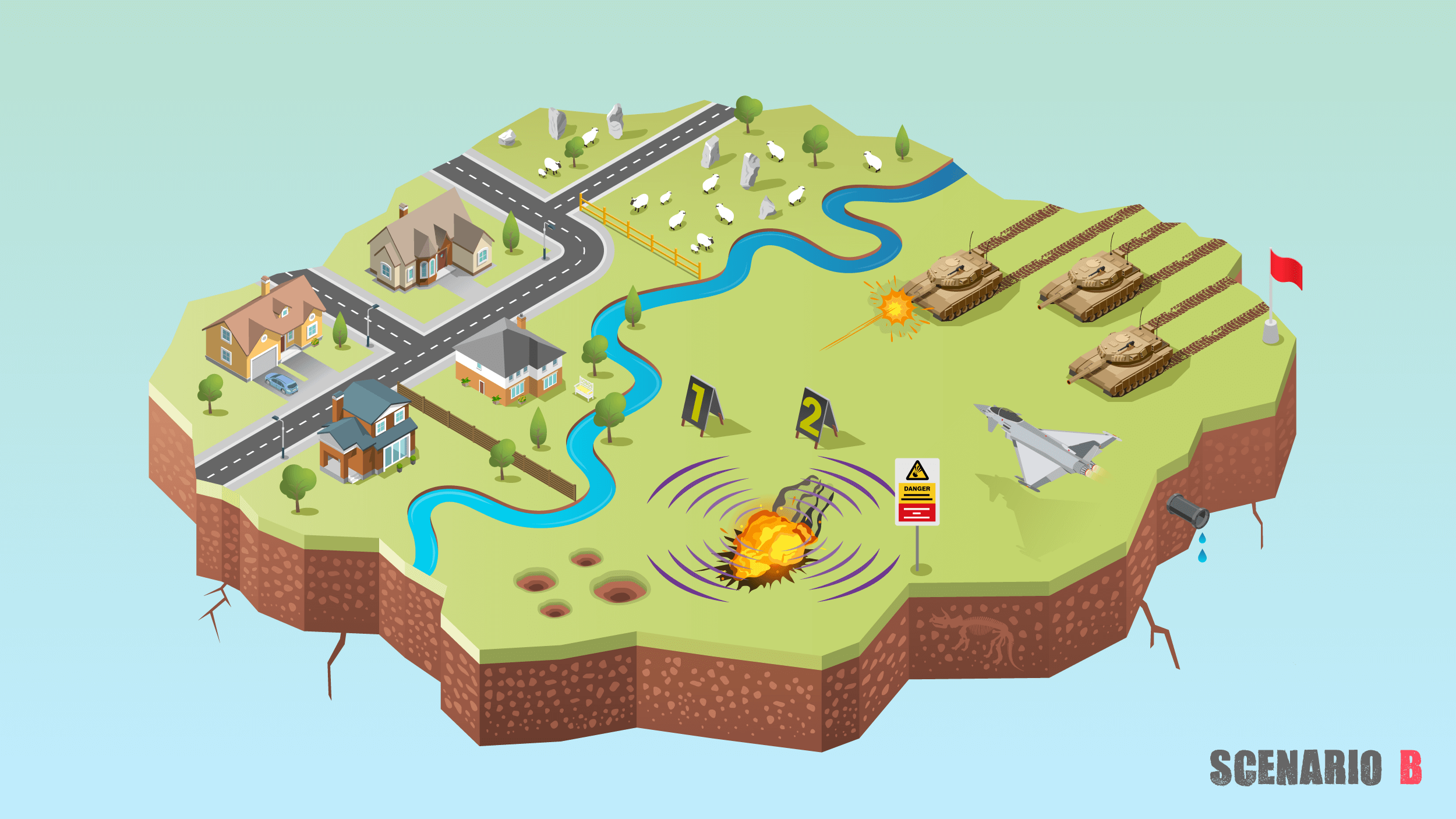
Contamination Challenge: Noise and Vibration Pathway
A scenario-based visual demonstrates source–pathway–receptor analysis by illustrating how live-fire detonations transmit noise and vibration through the air, impacting nearby built environments.
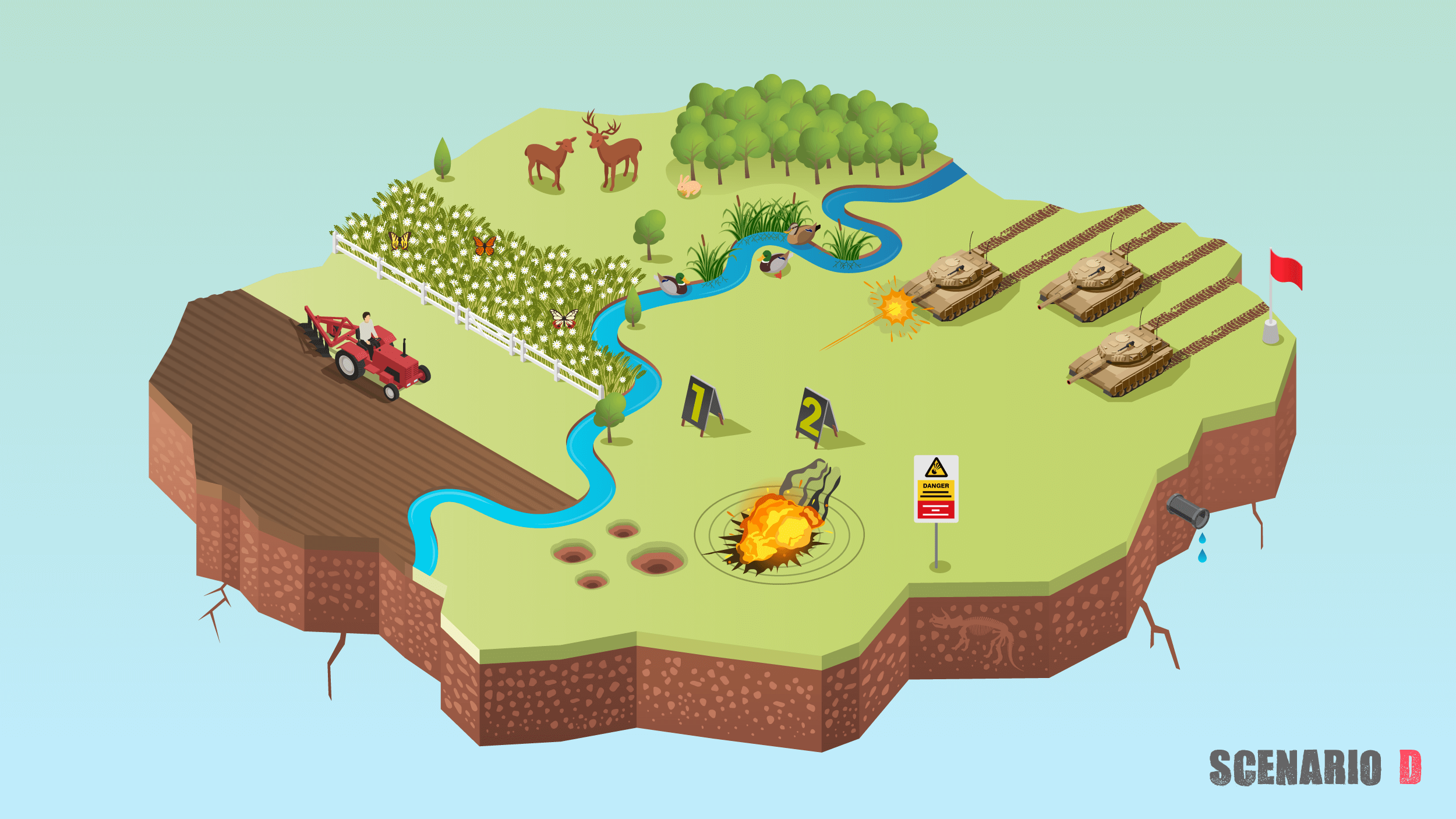
Contamination Challenge: Waterborne Residue Pathway
A scenario-based visual illustrates source–pathway–receptor analysis by depicting how residue may be washed into a pond, impacting specific plant receptors.
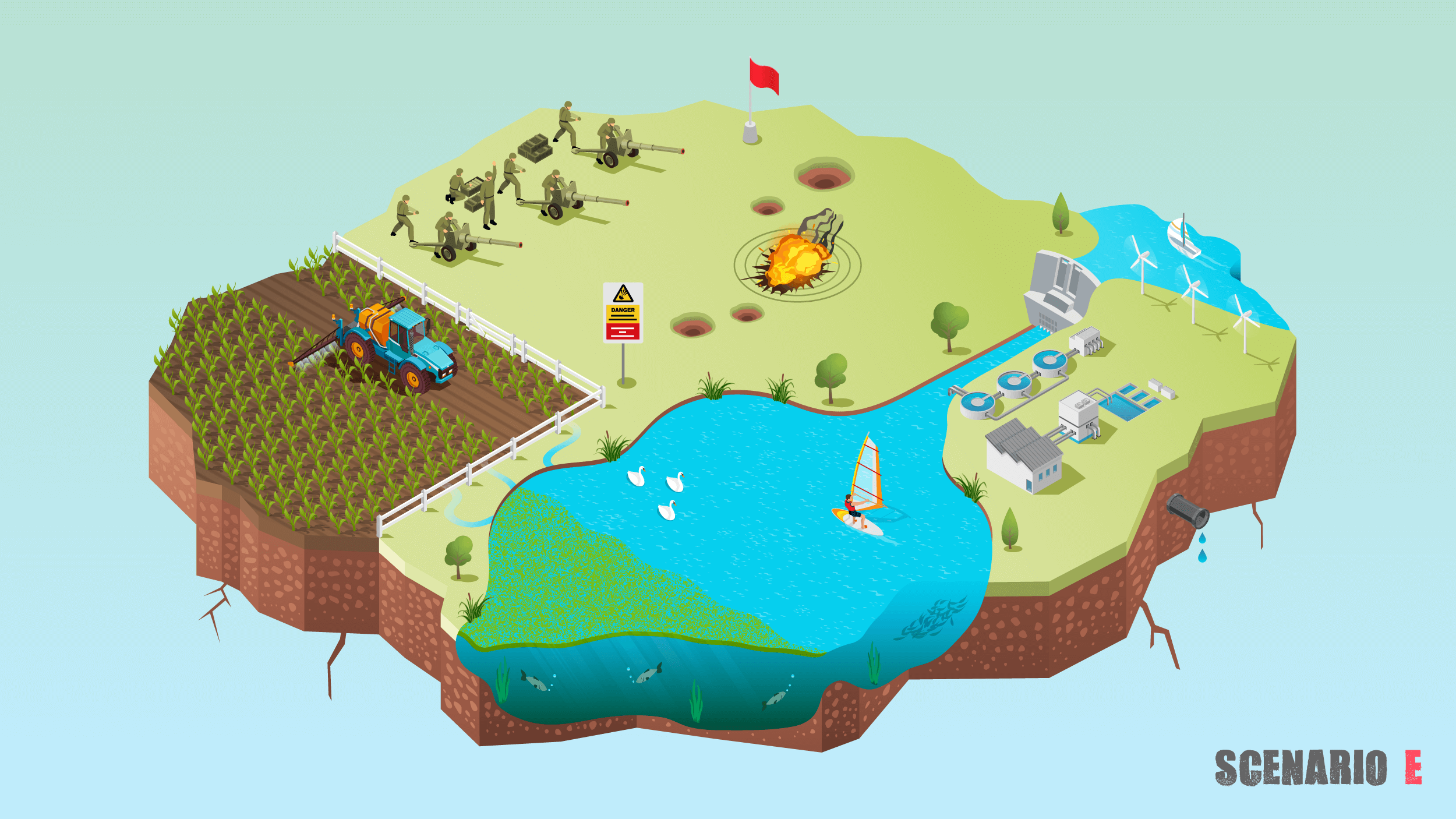
Contamination Challenge: Nutrient Run-off and Algal Growth
A scenario-based visual illustrates source–pathway–receptor analysis by showing how agricultural run-off introduces nitrates and phosphates into standing water, affecting the broader aquatic environment.
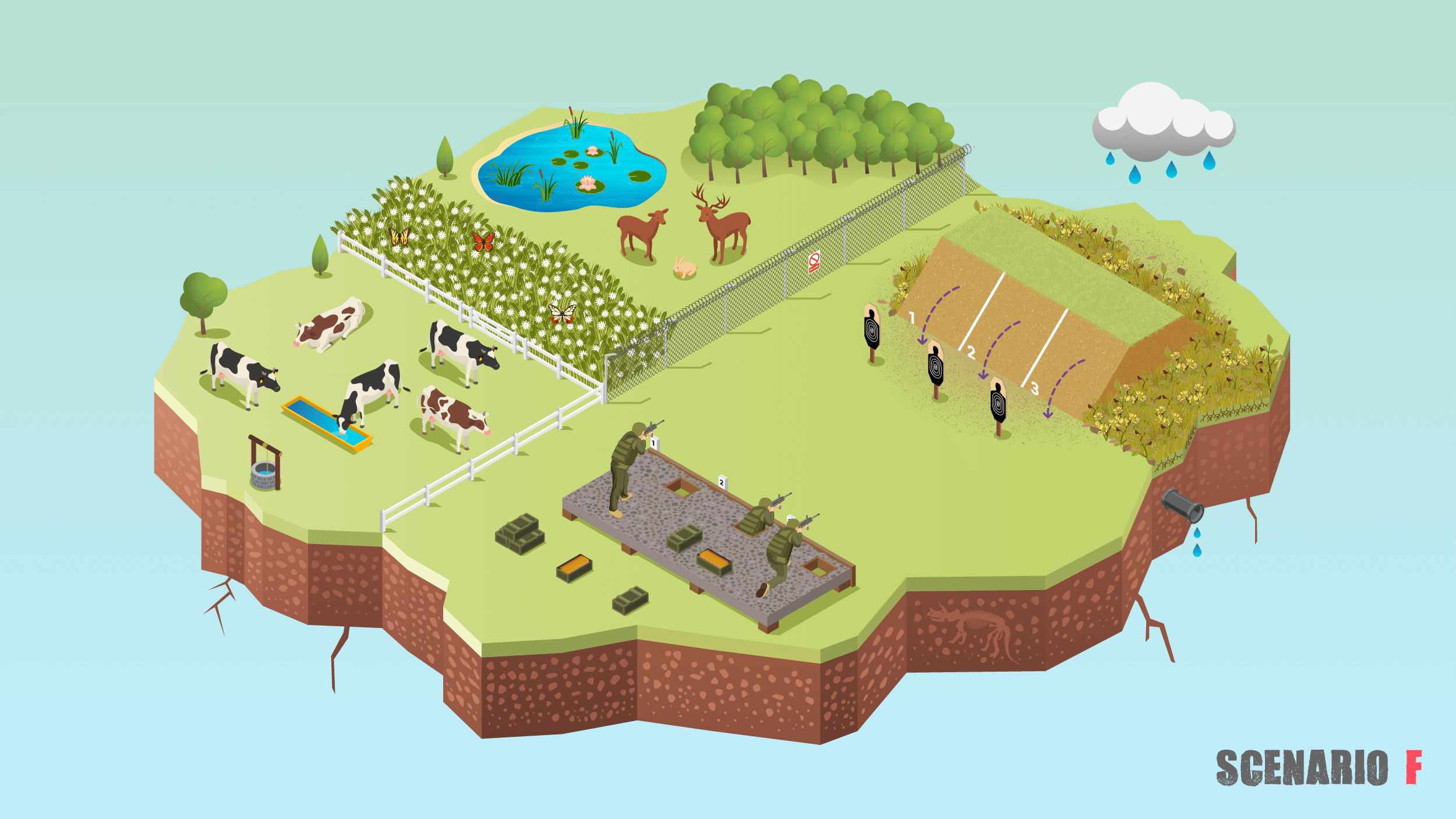
Contamination Challenge: Lead Transfer on a Small Arms Range
A scenario-based visual illustrates source–pathway–receptor analysis by showing how lead fragmentation travels through air and soil, impacting nearby plant health.